
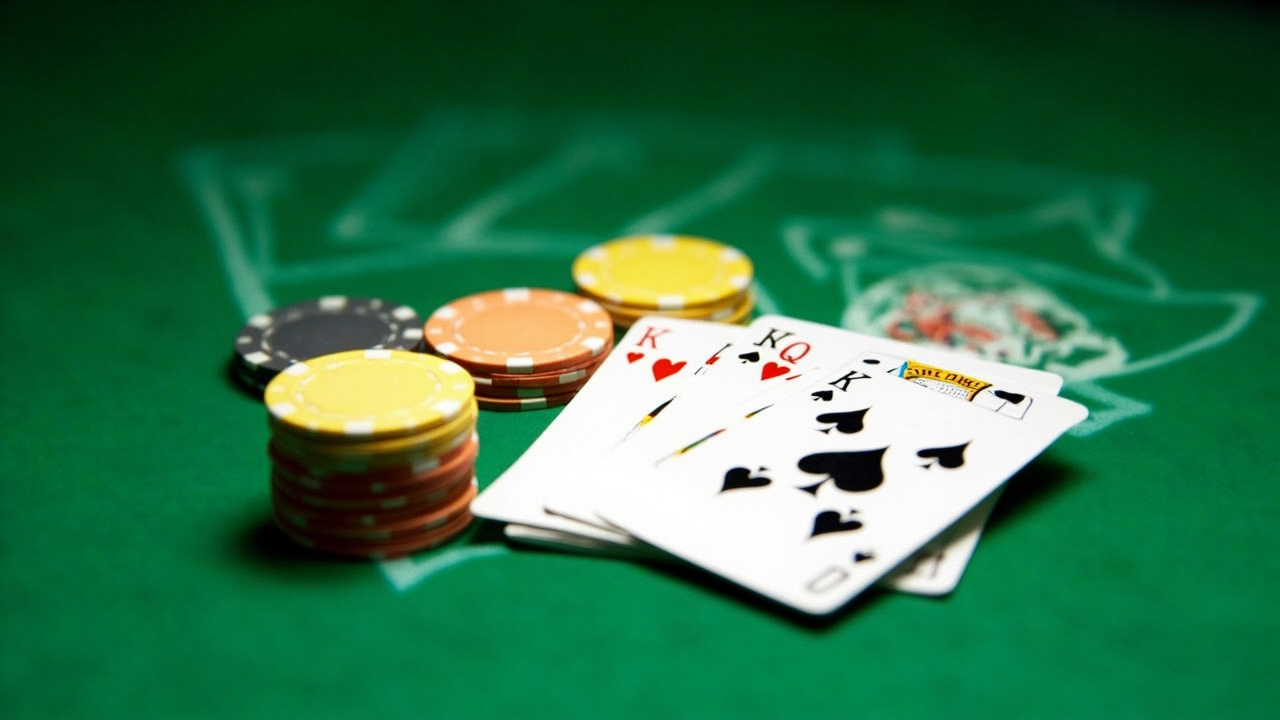
The smell of salt air off the Adelaide coast mixes with the low hum of a busy Saturday arvo, and down at the tables the same question keeps coming up: what are the real blackjack odds of winning when you sit down with a sensible bankroll? I’ve spent years watching supplier feeds and table economics from the managing-director seat at Independent Gaming Pty Ltd, so I reckon it pays to cut through the noise and look at the maths, the local conditions, and the practical trade-offs before you load up a screen or walk into a club. The short answer is that the edge shifts with the rules, your discipline, and the exact variant you choose, not with wishful thinking.
House Edge by Common Rule Set
The maths behind blackjack odds of winning is less mysterious than most promotional copy suggests, and it comes down to a handful of rule variables that change the house edge by fractions of a percent. A standard six-deck game where the dealer stands on soft 17, you can double after split, and late surrender is available will usually sit around a 0.3 to 0.5 per cent house edge with perfect basic strategy. Strip away double-after-split, push the dealer to hit soft 17, or only offer early surrender, and that edge climbs. Single-deck games look attractive on the surface, but the payout on a natural often drops to 6:5 in some online variants, which alone adds roughly 1.4 per cent to the house edge and wipes out most of the theoretical advantage. The table below gives a rough comparison so you can see how small rule changes compound before you even touch a card. Roulette Odds for Red or Black
| Variant / Rule Condition | Approx. House Edge (Perfect Strategy) | Practical Note |
|---|---|---|
| 6-deck, dealer stands soft 17, double after split, late surrender | 0.3-0.5% | Best common online and club setup |
| 6-deck, dealer hits soft 17, double after split allowed | 0.6-0.8% | Still workable, but the soft-17 shift matters |
| Single deck, natural pays 3:2 | 0.1-0.3% | Rare online; club availability varies by state |
| Single deck, natural pays 6:5 | ~1.5% | Avoid if you care about long-run expectation |
| 8-deck, no double after split, dealer hits soft 17 | 1.0-1.3% | Common on lower-stakes digital feeds |
I’ve seen supplier pitches that gloss over those differences and treat any blackjack feed as interchangeable, but from a commercial oversight angle that is a lazy read of the numbers. The right variant with disciplined play can keep the edge low enough that variance does the real work over a session, whereas a 6:5 payout or a restricted doubling rule quietly tilts the expectation before you place a single bet. If you want to compare how those rule sets stack up against a different table game’s probability picture, you can read our piece on roulette odds for red or black in Australia and see why the house edge there behaves very differently from a skill-influenced card game. red baron slots
Strategy, Variance, and the Reality of Sessions
Basic strategy is the closest thing to a free lunch in the game, because it removes guesswork and locks your decisions to the mathematically correct play for every hand. That does not guarantee a win on any given night, and anyone telling you otherwise is selling something. What it does is minimise the house edge and keep your session volatility within a range you can actually budget for. In practice, that means accepting that a solid hour can still swing against you through ordinary variance, especially on smaller stakes where the sample size is too thin to let the maths flatten out. I’ve reviewed enough live-dealer feeds and RNG tables to know that the interface matters here too: clear hit/stand/double controls, visible rule summaries, and a sensible bet slider make it easier to stick to the right play when the arvo gets busy and your attention is split.
The trade-off is that discipline rarely feels exciting in the moment. You will fold a promising-looking hand because the chart says so, and you will walk away from a hot streak with your bankroll intact rather than chasing a bigger swing. That is the part most promotional material skips, because it is less glamorous than promising a quick win. From a supplier-strategy perspective, the operators that build their blackjack rooms around clear rules, readable layouts, and honest payout displays tend to hold better player trust over time, because the product matches the maths instead of obscuring it.
Local Rules, Payments, and Everyday Usability
Australian players need to keep one thing front of mind: online casino play is not licensed or regulated here, so any digital blackjack table you access sits outside the local oversight framework that applies to club and casino floors. That does not make the maths different, but it does change how you judge the product. A well-built blackjack room for an Australian audience should still show its payout currency in AUD, display the exact rule set for each table, and make the bet limits and any bonus terms easy to find without digging through three menus. I’ve sat through enough supplier demos to know that localisation is where a lot of products fall down: a clean AUD display, sensible stake steps, and a support path that actually answers questions on a busy weeknight are worth more than a flashy welcome screen.
On the commercial side, the bonus mechanics around blackjack deserve a careful read because many offers exclude table games or cap the contribution to wagering requirements. If a promotion looks generous but silently excludes blackjack or counts it at a reduced percentage, the effective value drops fast. Payment timing and currency conversion are the other practical pieces: a product that settles in AUD and keeps the withdrawal path straightforward is easier to manage than one that buries you in conversion steps, even if the underlying game is identical. None of that changes the odds, but it changes whether the experience is worth your time and bankroll.
Where the Odds Actually Sit in Practice
If you want a realistic read on blackjack odds of winning, the honest answer is that they sit in a narrow band shaped by rule choice, strategy discipline, and the size of your sample. A well-configured six-deck table played with basic strategy keeps the house edge low enough that skill and bankroll management matter more than luck over time, while a 6:5 payout or a restricted rule set quietly erodes that advantage. I’ve judged enough supplier feeds to know that the products worth your attention are the ones that make the rules visible, keep the interface readable, and do not dress up a poor payout structure as a special offer. The rest is just variance, and variance does not care how confident the marketing sounds.
For players around Adelaide and across the country, the practical move is to pick a variant with a fair rule set, learn the basic strategy chart for that exact setup, and treat any session as a budgeted activity rather than a shortcut to a guaranteed result. If you prefer spinning to card play, you can always try red baron slots and accept that the probability profile there is a different beast entirely. The smartest read on blackjack odds of winning is simply that the edge is real, the rules matter, and discipline is the only part you actually control.